
Sustainability in PMBOK® 8: A Design Lens for Better Project Decisions
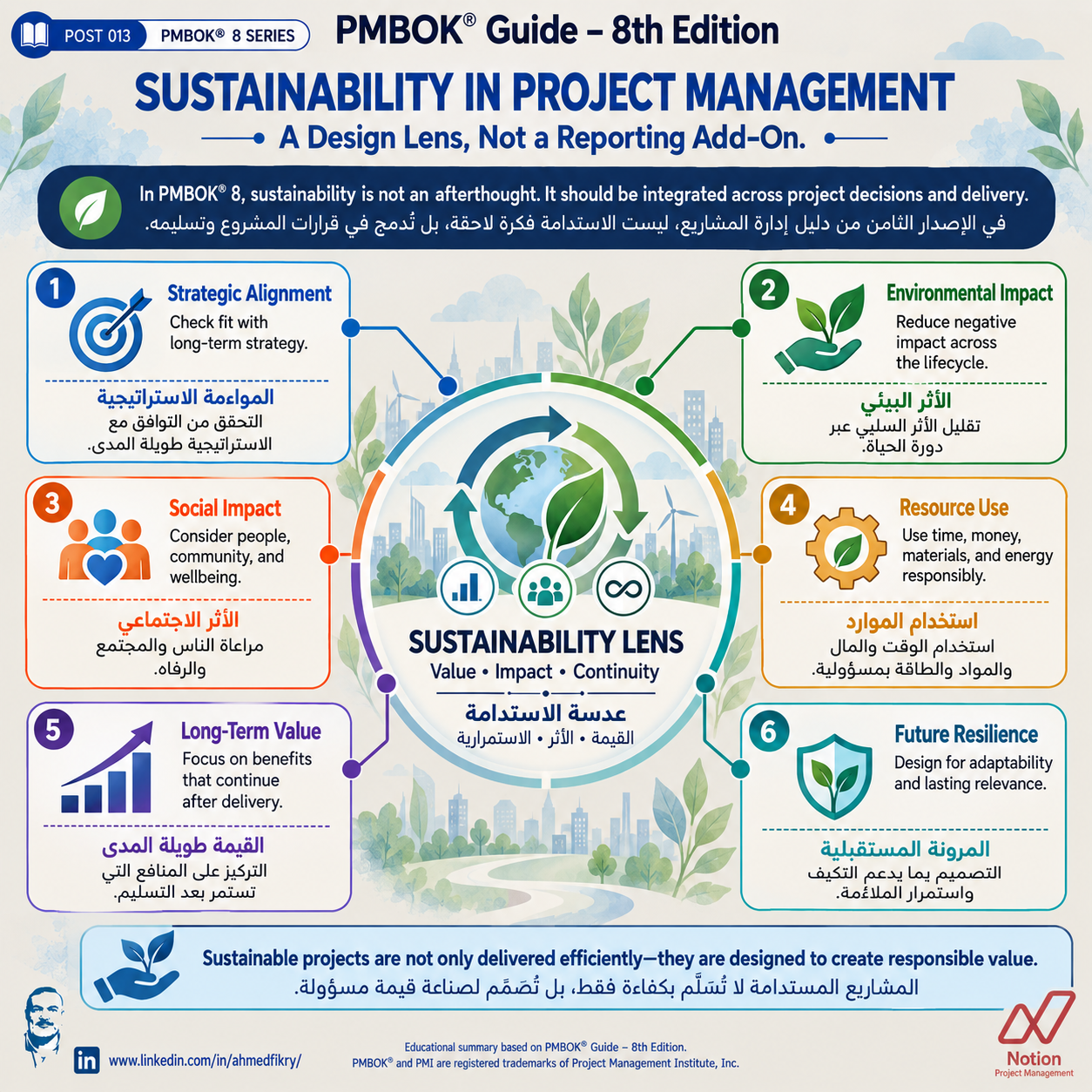
Sustainability in project management is often misunderstood.
In many organizations, it is still treated as a reporting requirement, a compliance topic, or a section added near the end of the project documentation.
But the PMBOK® Guide – Eighth Edition presents a stronger notion: sustainability should be integrated across all project areas.
That changes the conversation.
Sustainability is not only about reducing environmental harm. It is also about how project decisions affect people, communities, resources, long-term benefits, organizational resilience, and responsible value creation.
In other words, sustainability becomes a lens for better project decisions.
From Add-On to Design Lens
When sustainability is treated as an add-on, it usually appears too late.
The project has already been justified.
The scope has already been defined.
The budget has already been approved.
The delivery approach has already been selected.
At that stage, sustainability may become a reporting exercise rather than a decision-shaping principle.
A more mature approach is different.
Sustainability should influence how the project is framed from the beginning:
Why are we doing this project?
What value should it create?
Who may be affected by it?
What resources will it consume?
What impacts will continue after delivery?
What risks may emerge over the longer term?
These questions help move sustainability from documentation into governance, planning, delivery, and value realization.
Sustainability Broadens the Definition of Success
Traditional project success has often focused on delivery performance:
Was the scope delivered?
Was the project completed on time?
Was it delivered within budget?
These questions still matter.
But they are not enough.
A project can be delivered efficiently and still create unnecessary waste, weak long-term value, poor user adoption, social resistance, environmental damage, or future operational burden.
That is why sustainability expands the way we define success.
A successful project should not only deliver outputs. It should also create value that is responsible, relevant, and sustainable beyond the handover.
A Practical View of Sustainability in Projects
From a practical project management perspective, sustainability can influence many project decisions.
It can influence governance by ensuring that sustainability objectives are considered in approvals, trade-offs, and major decisions.
It can influence scope by embedding sustainability expectations into requirements and deliverables.
It can influence schedule by considering the lifecycle impact of timing, sequencing, and delivery choices.
It can influence finance by balancing short-term cost with long-term value, risk exposure, and benefit realization.
It can influence stakeholders by considering people, communities, customers, users, suppliers, and other affected groups.
It can influence risk by identifying long-term environmental, social, regulatory, reputational, or operational risks before they become expensive problems.
This is why sustainability should not sit outside project management.
It should be part of how project management is practiced.
The Real Challenge
The challenge is not whether organizations support sustainability in principle.
Most do.
The real challenge is whether sustainability changes project decisions.
Does it affect how business cases are prepared?
Does it influence prioritization?
Does it shape requirements?
Does it appear in risk discussions?
Does it guide procurement choices?
Does it influence benefits planning?
Does it remain visible after project delivery?
If the answer is no, then sustainability may be present in language but absent from governance.
Key Takeaway
Sustainability in project management should not be treated only as compliance, reporting, or reputation management.
It should be used as a design lens for better project decisions.
Sustainable projects are not only delivered efficiently. They are designed to create responsible value.
Related Articles and Further Reading
Related Notion in Ocean articles:
WBS for AI Agent Governance: Defining Authority Before Automation Scales
Project Sponsorship: More Than Project Approval
Further reading from PMI:
PMI Sustainability Resources
The PMI® GPM® P5™ Standard for Sustainability in Project Management
الاستدامة في الإصدار الثامن من الدليل المعرفي لإدارة المشاريع: عدسة مقربة لتصميم قرارات أفضل
كثيرًا ما يُساء فهم الاستدامة في إدارة المشاريع.
ففي كثير من المؤسسات، ما زالت الاستدامة تُعامل باعتبارها متطلبًا تقريريًا، أو موضوعًا مرتبطًا بالامتثال، أو جزءًا يُضاف قرب نهاية وثائق المشروع.
لكن الإصدار الثامن من الدليل المعرفي لإدارة المشاريع يقدم فكرة أقوى، وهي أنه ينبغي دمج الاستدامة في جميع مجالات المشروع.
وهذا يغيّر طبيعة النقاش.
فالاستدامة لا تتعلق فقط بتقليل الأثر البيئي السلبي، بل تتعلق أيضًا بكيفية تأثير قرارات المشروع في الناس، والمجتمعات، والموارد، والفوائد طويلة المدى، ومرونة المؤسسة، وصناعة قيمة مسؤولة.
بمعنى آخر، تصبح الاستدامة عدسة لاتخاذ قرارات أفضل في المشروع.
من إضافة لاحقة إلى عدسة تصميم
عندما تُعامل الاستدامة كإضافة لاحقة، فإنها غالبًا تظهر في وقت متأخر.
يكون المشروع قد تم تبريره بالفعل.
ويكون النطاق قد تم تحديده بالفعل.
وتكون الميزانية قد تم اعتمادها بالفعل.
ويكون نهج التسليم قد تم اختياره بالفعل.
في هذه المرحلة، قد تتحول الاستدامة إلى تمرين تقريري، بدلًا من أن تكون مبدأً مؤثرًا في القرار.
أما النهج الأكثر نضجًا فهو مختلف.
ينبغي أن تؤثر الاستدامة في طريقة صياغة المشروع منذ البداية.
لماذا ننفذ هذا المشروع؟
ما القيمة التي ينبغي أن يحققها؟
من قد يتأثر به؟
ما الموارد التي سيستهلكها؟
ما الآثار التي ستستمر بعد التسليم؟
ما المخاطر التي قد تظهر على المدى الطويل؟
هذه الأسئلة تساعد على نقل الاستدامة من التوثيق إلى الحوكمة، والتخطيط، والتسليم، وتحقيق القيمة.
الاستدامة توسّع تعريف النجاح
كان نجاح المشروع يُقاس غالبًا من خلال أداء التسليم.
هل تم تسليم النطاق؟
هل اكتمل المشروع في الوقت المحدد؟
هل تم تنفيذه ضمن الميزانية؟
هذه الأسئلة ما زالت مهمة.
لكنها لا تكفي.
قد يُسلَّم المشروع بكفاءة، ومع ذلك يخلق هدرًا غير ضروري، أو قيمة ضعيفة على المدى الطويل، أو ضعفًا في تبنّي المستخدمين، أو مقاومة اجتماعية، أو أثرًا بيئيًا سلبيًا، أو عبئًا تشغيليًا مستقبليًا.
لذلك، توسّع الاستدامة طريقة تعريف نجاح المشروع.
فالمشروع الناجح لا ينبغي أن يسلّم مخرجات فقط، بل ينبغي أن يخلق قيمة مسؤولة، وملائمة، ومستدامة بعد التسليم.
نظرة عملية للاستدامة في المشاريع
من منظور عملي في إدارة المشاريع، يمكن أن تؤثر الاستدامة في كثير من قرارات المشروع.
يمكن أن تؤثر في الحوكمة، من خلال التأكد من مراعاة أهداف الاستدامة في الاعتمادات، والمفاضلات، والقرارات الرئيسية.
ويمكن أن تؤثر في النطاق، من خلال دمج توقعات الاستدامة ضمن المتطلبات والتسليمات.
ويمكن أن تؤثر في الجدول الزمني، من خلال مراعاة أثر التوقيت، والتتابع، وخيارات التسليم عبر دورة الحياة.
ويمكن أن تؤثر في التمويل، من خلال الموازنة بين التكلفة قصيرة المدى، والقيمة طويلة المدى، والتعرض للمخاطر، وتحقيق المنافع.
ويمكن أن تؤثر في المعنيين، من خلال مراعاة الناس، والمجتمعات، والعملاء، والمستخدمين، والموردين، والفئات الأخرى المتأثرة بالمشروع.
ويمكن أن تؤثر في المخاطر، من خلال تحديد المخاطر البيئية، والاجتماعية، والتنظيمية، والتشغيلية، والمتعلقة بالسمعة، قبل أن تتحول إلى مشكلات مكلفة.
لذلك، لا ينبغي أن تبقى الاستدامة خارج إدارة المشاريع.
بل ينبغي أن تكون جزءًا من كيفية ممارسة إدارة المشاريع.
التحدي الحقيقي
التحدي ليس ما إذا كانت المؤسسات تؤيد الاستدامة من حيث المبدأ.
فمعظم المؤسسات تفعل ذلك.
التحدي الحقيقي هو ما إذا كانت الاستدامة تغيّر قرارات المشروع فعلًا.
هل تؤثر في إعداد مبرر المشروع؟
هل تؤثر في ترتيب الأولويات؟
هل تشكّل المتطلبات؟
هل تظهر في نقاشات المخاطر؟
هل توجّه اختيارات الشراء؟
هل تؤثر في تخطيط المنافع؟
هل تظل حاضرة بعد تسليم المشروع؟
إذا كانت الإجابة لا، فقد تكون الاستدامة حاضرة في اللغة، لكنها غائبة عن الحوكمة.
الخلاصة الرئيسية
لا ينبغي التعامل مع الاستدامة في إدارة المشاريع باعتبارها امتثالًا، أو تقارير، أو تحسينًا للصورة المؤسسية فقط.
بل ينبغي استخدامها كعدسة تصميم لاتخاذ قرارات أفضل في المشروع.
فالمشاريع المستدامة لا تُسلَّم بكفاءة فقط، بل تُصمَّم لصناعة قيمة مسؤولة.
مقالات ذات صلة وقراءة إضافية
مقالات ذات صلة من نوشن
WBS for AI Agent Governance: Defining Authority Before Automation Scales
Project Sponsorship: More Than Project Approval
قراءة إضافية من معهد إدارة المشاريع
PMI Sustainability Resources
The PMI® GPM® P5™ Standard for Sustainability in Project Management
Continue the conversation on LinkedIn تابع النقاش على
Disclaimer: This article is an independent educational summary and is not an official PMI publication or endorsement. PMI, PMBOK, and PMBOK® Guide are trademarks or registered trademarks of Project Management Institute, Inc.Sources:
PMBOK® Guide – Eighth Edition, sections on the project management mindset, the principle “Integrate Sustainability Within All Project Areas”, and connected performance domains.
