
A Project Can Be Well Managed, and Still Fail
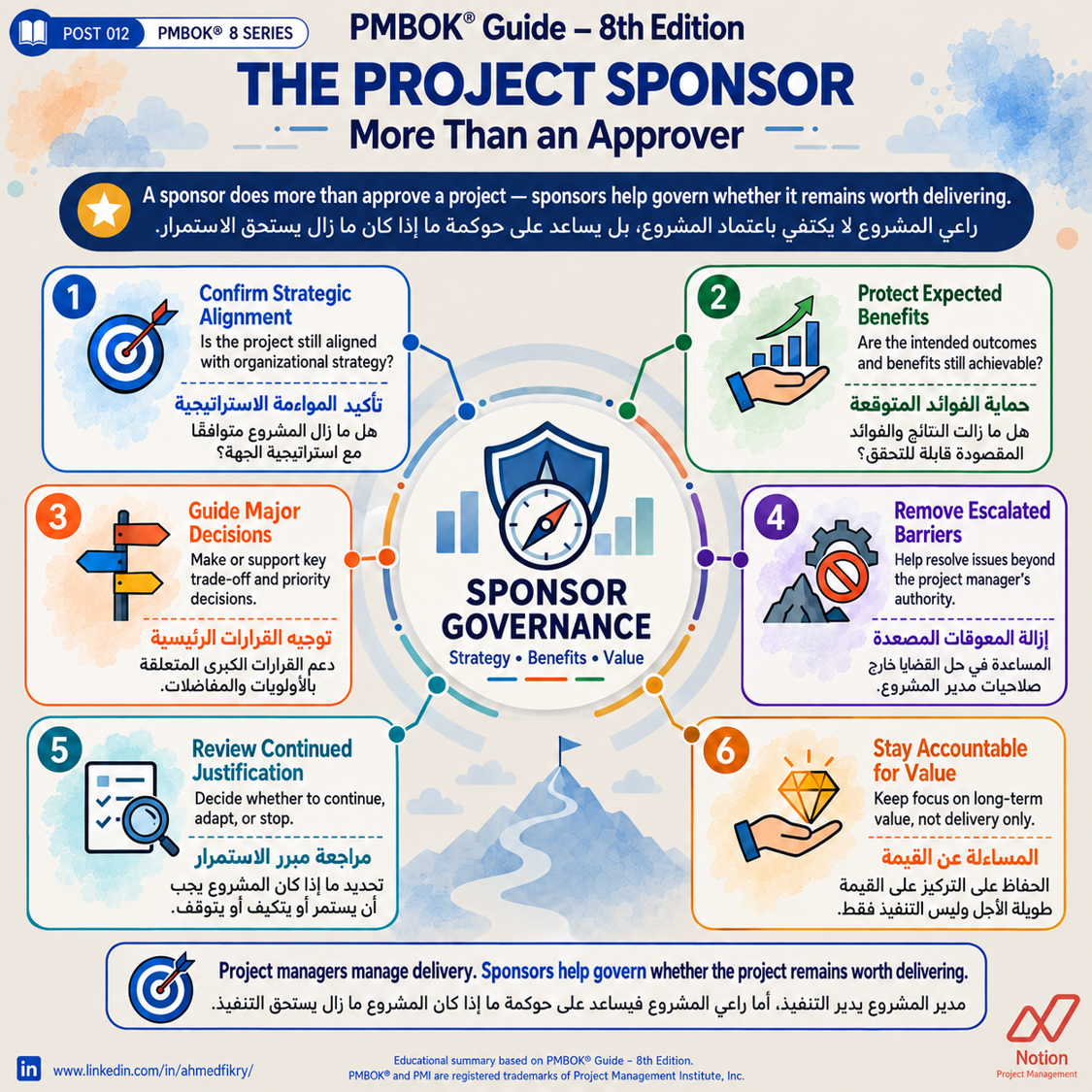
Why project sponsorship should be treated as a governance discipline, not only an approval role
A project can meet the approved scope, schedule, and budget, and still fail to create the value it was meant to deliver.
This is one of the most important distinctions in modern project management.
For many organizations, project success is still viewed mainly through the delivery lens:
Was the project completed?
Was it delivered on time?
Was it within budget?
Was the agreed scope delivered?
These questions matter. But they are not enough.
A project is not initiated simply to produce deliverables. It is initiated to solve a problem, enable a change, realize benefits, or create strategic value.
This is where the role of the project sponsor becomes critical.
The sponsor is not only an approver
In many organizations, the project sponsor is visible at the beginning of the project and during major escalation points.
The sponsor may approve the business case, secure funding, attend steering committee meetings, or help remove major barriers.
But effective sponsorship goes beyond these moments.
A strong project sponsor helps govern whether the project remains worth delivering.
That means continuously asking:
Is the project still strategically justified?
Are the intended outcomes and benefits still achievable?
Have the assumptions behind the investment changed?
Are major trade-offs protecting or eroding value?
Should the project continue, adapt, or stop?
This is not administrative involvement.
It is governance accountability.
Project managers manage delivery. Sponsors govern continued justification.
A project manager is accountable for managing the project work, coordinating the team, controlling performance, managing risks, engaging stakeholders, and supporting delivery.
The sponsor’s role is different.
The sponsor helps protect the strategic reason for the project.
This includes maintaining alignment with organizational priorities, supporting major trade-off decisions, ensuring benefits remain realistic, and confirming that the project continues to deserve the organization’s investment of time, money, attention, and capability.
The distinction is important:
Project managers manage delivery.
Sponsors help govern whether the project remains worth delivering.
When this distinction is weak, organizations may deliver projects efficiently but still miss the intended outcomes.
The real risk: delivery success without business value
A project can appear successful on paper while still failing in practice.
This happens when teams focus heavily on delivery performance but lose sight of the reason the project exists.
For example:
The business environment changes, but the project continues unchanged.
Expected benefits become unrealistic, but no one revisits the business case.
Strategic priorities shift, but the project remains protected because it is already approved.
Major trade-offs are made locally, without assessing their impact on long-term value.
The project delivers outputs, but the organization does not realize the intended outcomes.
In these situations, the issue is not always poor project management.
Sometimes the issue is weak sponsorship.
Sponsorship as a governance discipline
As projects become more complex, sponsorship should not be treated as a ceremonial title assigned at project initiation.
It should be treated as a governance discipline.
This means the sponsor needs clear accountability for:
Strategic alignment
Decision rights
Escalation and barrier removal
Benefits protection
Trade-off decisions
Continued business justification
Long-term value
The sponsor does not replace the project manager.
But the sponsor provides the governance connection between project delivery and organizational value.
Without that connection, project teams may stay busy, reports may look positive, and deliverables may be completed, while the business value quietly disappears.
A practical question for organizations
Every organization should ask a simple question:
Do our project sponsors only approve projects, or do they actively govern whether projects remain worth delivering?
The answer can reveal a lot about the maturity of project governance.
Because in mature project environments, sponsorship is not only about starting a project.
It is about protecting the reason for doing it.
Key Takeaway
Project success should not be judged only by delivery performance.
A project may be well managed and still fail if it does not create the value it was intended to deliver.
Effective project sponsorship helps close this gap by keeping the project connected to strategy, outcomes, benefits, and long-term value.
Further Reading
PMI, Project Sponsor Responsibilities: Governing Sustainability and Long-Term Value
https://www.pmi.org/blog/project-sponsor-responsibilities-sustainability
PMI-GPM, Guide to Responsible Project Sponsorship
https://www.pmi.org/learning/sustainability/the-pmi-gpm-guide-to-responsible-project-sponsorship
يمكن أن يُدار المشروع بكفاءة — ومع ذلك يفشل
لماذا يجب التعامل مع رعاية المشروع كجزء من الحوكمة، وليس فقط كدور للاعتماد
يمكن أن يحقق المشروع النطاق والجدول الزمني والميزانية المعتمدة، ومع ذلك يفشل في تحقيق القيمة التي أُنشئ من أجلها.
هذا من أهم الفروق في إدارة المشاريع الحديثة.
في كثير من المؤسسات، ما زال نجاح المشروع يُنظر إليه غالبًا من زاوية التنفيذ:
هل اكتمل المشروع؟
هل تم تسليمه في الوقت المحدد؟
هل تم تنفيذه ضمن الميزانية؟
هل تم تسليم النطاق المتفق عليه؟
هذه الأسئلة مهمة، لكنها لا تكفي.
فالمشروع لا يبدأ لمجرد إنتاج مخرجات. بل يبدأ لحل مشكلة، أو تمكين تغيير، أو تحقيق فوائد، أو خلق قيمة استراتيجية.
وهنا يصبح دور راعي المشروع محوريًا.
راعي المشروع ليس مجرد جهة اعتماد
في كثير من المؤسسات، يظهر دور راعي المشروع بوضوح في بداية المشروع، أو عند نقاط التصعيد الكبرى.
قد يعتمد راعي المشروع مبرر المشروع، أو يؤمّن التمويل، أو يحضر اجتماعات اللجنة التوجيهية، أو يساعد في إزالة المعوقات الكبرى.
لكن الرعاية الفعالة للمشروع تتجاوز هذه اللحظات.
راعي المشروع القوي يساعد في حوكمة ما إذا كان المشروع ما زال يستحق التنفيذ.
وهذا يعني الاستمرار في طرح أسئلة مهمة:
هل ما زال المشروع مبررًا استراتيجيًا؟
هل ما زالت النتائج والفوائد المقصودة قابلة للتحقق؟
هل تغيّرت الافتراضات التي بُني عليها الاستثمار؟
هل تحمي القرارات الكبرى القيمة أم تُضعفها؟
هل يجب أن يستمر المشروع، أم يتكيف، أم يتوقف؟
هذا ليس مجرد حضور إداري.
بل هو مساءلة حوكمية.
مدير المشروع يدير التنفيذ. وراعي المشروع يحوكم مبرر الاستمرار.
مدير المشروع مسؤول عن إدارة أعمال المشروع، وتنسيق الفريق، ومتابعة الأداء، وإدارة المخاطر، والتعامل مع أصحاب المصلحة، ودعم التنفيذ.
أما دور راعي المشروع فهو مختلف.
راعي المشروع يساعد في حماية السبب الاستراتيجي لوجود المشروع.
ويشمل ذلك الحفاظ على المواءمة مع أولويات المؤسسة، ودعم قرارات المفاضلة الكبرى، والتأكد من أن الفوائد ما زالت واقعية، والتحقق من أن المشروع ما زال يستحق استثمار المؤسسة من الوقت والمال والاهتمام والقدرات.
هذا الفرق مهم:
مدير المشروع يدير التنفيذ.
أما راعي المشروع فيساعد على حوكمة ما إذا كان المشروع ما زال يستحق التنفيذ.
وعندما يكون هذا الفرق غير واضح، قد تنفذ المؤسسات مشاريع بكفاءة، لكنها لا تحقق النتائج المقصودة.
الخطر الحقيقي: نجاح في التنفيذ دون قيمة للأعمال
قد يبدو المشروع ناجحًا على الورق، لكنه يفشل عمليًا.
ويحدث ذلك عندما يركز الفريق بشدة على أداء التنفيذ، بينما يبتعد تدريجيًا عن السبب الذي وُجد المشروع من أجله.
على سبيل المثال:
تتغير بيئة العمل، لكن المشروع يستمر دون تعديل.
تصبح الفوائد المتوقعة غير واقعية، لكن لا أحد يراجع مبرر المشروع.
تتغير الأولويات الاستراتيجية، لكن المشروع يستمر لأنه سبق اعتماده.
تُتخذ قرارات مفاضلة مهمة على مستوى محلي، دون تقييم أثرها على القيمة طويلة الأجل.
يسلّم المشروع مخرجاته، لكن المؤسسة لا تحقق النتائج المقصودة.
في هذه الحالات، لا تكون المشكلة دائمًا ضعفًا في إدارة المشروع.
أحيانًا تكون المشكلة ضعفًا في رعاية المشروع.
رعاية المشروع كجزء من الحوكمة
مع زيادة تعقيد المشاريع، لا ينبغي التعامل مع رعاية المشروع كلقب شكلي يُمنح عند بدء المشروع.
بل يجب التعامل معها كجزء من الحوكمة.
وهذا يعني أن راعي المشروع يحتاج إلى مساءلة واضحة عن:
المواءمة الاستراتيجية
صلاحيات اتخاذ القرار
التصعيد وإزالة المعوقات
حماية الفوائد
قرارات المفاضلة
استمرار المبرر التجاري للمشروع
القيمة طويلة الأجل
راعي المشروع لا يستبدل مدير المشروع.
لكنه يوفر حلقة الربط الحوكمية بين تنفيذ المشروع والقيمة المؤسسية.
ومن دون هذه الحلقة، قد تظل فرق المشروع مشغولة، وقد تبدو التقارير إيجابية، وقد تكتمل المخرجات، بينما تختفي قيمة الأعمال تدريجيًا.
سؤال عملي للمؤسسات
ينبغي على كل مؤسسة أن تطرح سؤالًا بسيطًا:
هل يكتفي رعاة المشاريع لدينا باعتماد المشاريع، أم يشاركون بفاعلية في حوكمة ما إذا كانت المشاريع ما زالت تستحق التنفيذ؟
الإجابة عن هذا السؤال قد تكشف الكثير عن نضج حوكمة المشاريع داخل المؤسسة.
ففي بيئات المشاريع الناضجة، لا تتعلق رعاية المشروع فقط ببدء المشروع.
بل تتعلق بحماية السبب الذي من أجله بدأ المشروع.
الخلاصة الرئيسية
لا ينبغي الحكم على نجاح المشروع من خلال أداء التنفيذ فقط.
قد يُدار المشروع بكفاءة، ومع ذلك يفشل إذا لم يحقق القيمة التي أُنشئ من أجلها.
وتساعد رعاية المشروع الفعالة على سد هذه الفجوة من خلال إبقاء المشروع مرتبطًا بالاستراتيجية والنتائج والفوائد والقيمة طويلة الأجل.
قراءة إضافية
معهد إدارة المشاريع — مسؤوليات راعي المشروع: حوكمة الاستدامة والقيمة طويلة الأجل
https://www.pmi.org/blog/project-sponsor-responsibilities-sustainability
معهد إدارة المشاريع بالشراكة مع المنظمة العالمية لإدارة المشاريع الخضراء — دليل رعاية المشروع المسؤولة
https://www.pmi.org/learning/sustainability/the-pmi-gpm-guide-to-responsible-project-sponsorship
Continue the conversation on LinkedIn تابع النقاش على
Disclaimer: This article is an independent educational summary and is not an official PMI publication or endorsement. PMI, PMBOK, and PMBOK® Guide are trademarks or registered trademarks of Project Management Institute, Inc. 