
WBS for AI Agent Governance: Defining Authority Before Automation Scales
Why This Matters
AI agents are becoming increasingly useful in project environments. They can draft reports, track actions, identify risks, organize information, and support routine coordination. However, once teams move from using AI as a simple assistant to relying on it as an active delivery agent, an important governance question emerges.
What exactly is the AI agent allowed to do
This is where the Work Breakdown Structure can play a much more important role than many teams realize. Traditionally, the WBS helps define the work that must be delivered. In an AI enabled delivery environment, it can also help define the boundaries within which that work is performed.
The WBS as a Governance Tool
A well designed WBS does more than decompose deliverables into manageable work packages. It creates clarity. That clarity becomes even more valuable when some parts of the work are supported or executed by AI agents.
In this context, the WBS can help project teams clarify not only what needs to be done, but also how responsibility should be distributed between people and AI. Instead of treating AI use as an informal productivity shortcut, the project team can formally embed governance into the structure of the work itself.
This shifts the conversation from using AI because it is available to using AI in a controlled and accountable way.
What the WBS Should Define
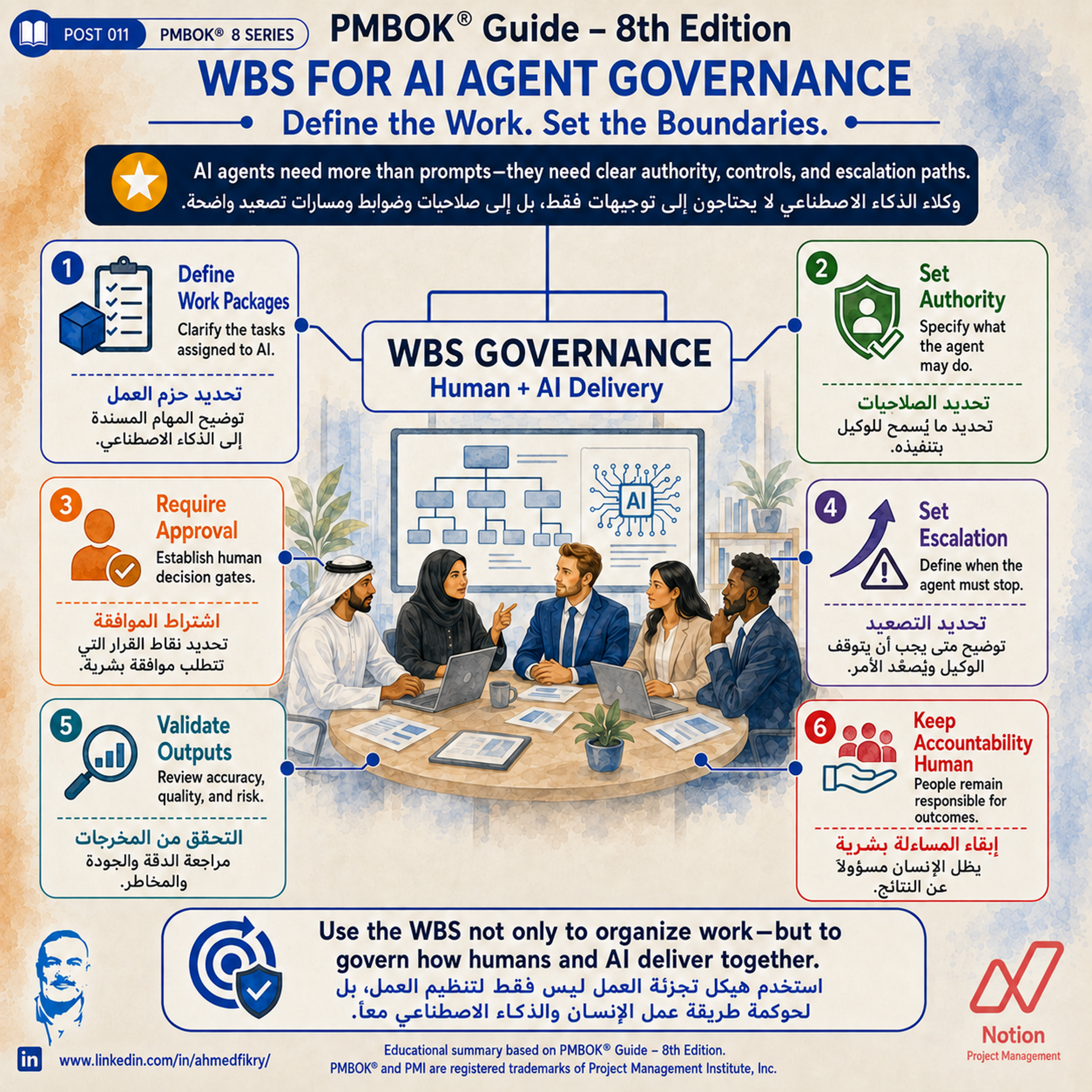
When organizations use AI agents in projects, the WBS can help define key governance decisions such as
What tasks or work packages may be supported or handled by AI
What activities must remain under direct human control
Where human approval is required before work can proceed
What conditions require the AI agent to stop and escalate
How outputs will be reviewed validated and audited
These are not technical details only. They are project governance decisions. They affect accountability quality risk management and stakeholder confidence.
Why Boundaries Matter
Automation can improve speed and efficiency. But speed without clear authority can create confusion. If an AI agent produces an output that influences a decision, escalates an issue too late, or acts beyond its intended role, the real problem is often not the technology itself. The real problem is the absence of clear boundaries.
An AI agent can help generate structure and maintain information. It can support execution. But it cannot determine an organization’s risk appetite, decision rights, approval logic, or delegation limits. Those remain management responsibilities.
That is why governance must come before scale. Before an organization expands the use of AI agents, it should define where automation adds value and where human judgment must remain fully in control.
The Evolving Role of the Project Manager
This does not reduce the importance of the project manager. It increases it.
The project manager is no longer only the person who manually maintains every project work product. The role is increasingly about designing the delivery environment, setting control points, and governing how humans and AI work together.
In other words, project leadership is evolving from managing tasks alone to governing an integrated human and AI delivery model.
That is a strategic shift, not an administrative one.
Practical Takeaway
Project teams do not need to wait for enterprise wide AI governance frameworks before taking action. A practical starting point is to use the WBS as a governance mechanism.
If the WBS clearly defines the work, the decision rights, the approval gates, the escalation conditions, and the validation expectations, then the team is in a much stronger position to use AI responsibly and effectively.
الفكرة الأساسية
مع تزايد استخدام وكلاء الذكاء الاصطناعي في المشاريع أصبح من المهم ألا ننظر إليهم فقط كأدوات تساعد في السرعة
بل كعناصر مشاركة في تنفيذ العمل تحتاج إلى ضوابط واضحة
وهنا يظهر دور جديد ومهم لهيكل تجزئة العمل
هيكل تجزئة العمل كأداة حوكمة
هيكل تجزئة العمل لا يساعد فقط في تقسيم المشروع إلى حزم عمل ومخرجات واضحة
بل يمكن أن يساعد أيضا في تحديد حدود استخدام الذكاء الاصطناعي داخل المشروع
وبذلك يصبح وسيلة لتنظيم العمل وحوكمة طريقة التنفيذ في الوقت نفسه
ما الذي يمكن أن يوضحه الهيكل
يمكن لهيكل تجزئة العمل أن يوضح ما الذي يسمح لوكيل الذكاء الاصطناعي بتنفيذه
وما الذي يجب أن يبقى تحت السيطرة البشرية
وأين تكون الموافقة البشرية إلزامية
ومتى يجب أن يتوقف الوكيل ويقوم بالتصعيد
وكيف تتم مراجعة المخرجات والتحقق منها وتوثيقها
لماذا هذا مهم
الأتمتة قد تجعل العمل أسرع
لكنها من دون حدود واضحة قد تجعل المساءلة أقل وضوحا
وعندما لا تكون الصلاحيات محددة بشكل صريح فقد يتم استخدام الذكاء الاصطناعي بطريقة تتجاوز ما هو مقبول تنظيميا أو مهنيا
لذلك فإن الحوكمة يجب أن تسبق التوسع في الاستخدام
دور مدير المشروع
دور مدير المشروع لا يختفي
بل يتطور
فبدلا من التركيز فقط على المتابعة اليدوية لكل مخرج
يصبح الدور أكثر ارتباطا بتصميم بيئة العمل وتحديد نقاط التحكم وحوكمة التعاون بين الإنسان والذكاء الاصطناعي
وهذا يجعل دور مدير المشروع أكثر أهمية في بيئات العمل الحديثة
الخلاصة العملية
إذا أرادت فرق المشاريع استخدام الذكاء الاصطناعي بصورة مسؤولة فإن أفضل نقطة بداية هي إدخال الحوكمة داخل هيكل العمل نفسه
وعندما يحدد الهيكل بوضوح حدود التنفيذ والصلاحيات والموافقات والتصعيد وآليات التحقق تصبح الاستفادة من الذكاء الاصطناعي أكثر أمانا وأكثر قيمة
How clearly has your project defined what AI is allowed to do and where human authority must remain in control?
Continue the conversation on LinkedIn تابع النقاش على
Disclaimer: This article is an independent educational summary and is not an official PMI publication or endorsement. PMI, PMBOK, and PMBOK® Guide are trademarks or registered trademarks of Project Management Institute, Inc.